• As I reflect on this school year, I keep thinking about the evolution of our art show.

    Years ago, it looked more like a traditional school art show. Student artwork was framed and displayed in the gym. Families walked through the space, searching for their child’s work, taking pictures, and celebrating the beautiful things students had created. Artwork was available for purchase, and there was something very special about seeing children’s art treated with care and importance.

    That mattered.

    It still matters.

    There is something powerful about a child seeing their artwork framed and displayed. There is something powerful about a family pausing in front of a piece of art and saying, “You made this.” For many students, that moment is a first experience of being seen as an artist by the people they love.

    But over time, the art show began to shift.

    At first, the shift was small. Then it became more visible. Eventually, I realized that what I wanted to celebrate was not only the finished artwork hanging on the wall. I wanted families to see more of the creative life of our school. I wanted them to see the thinking, exploring, problem-solving, storytelling, performing, building, revising, collaborating, and risk-taking that happens in and around the art room all year long.

    The art show was no longer just an exhibit.

    It was becoming something else.

    Now, it has grown into the Briarlake Arts Fest.

    This year, our Arts Fest included the Artome-framed student art exhibit, student artist vendors, family and community vendors, 3rd–5th grade performances, Dauphin Dance, food, bubbles, special guests, and our Family Cardboard Challenge. What began as an art show has become a full celebration of creativity across our school community.

    One of my favorite parts of this evolution has been watching the Artist Market grow. Now in its fourth year, the Artist Market gives students the opportunity to create their own items, prepare them for sale, set up a display, talk with visitors, and share their work with an authentic audience.

    This is not just cute.

    This is important.

    When students participate as artist vendors, they are practicing so many things at once. They are imagining possibilities. They are making decisions. They are solving problems. They are thinking about materials, time, audience, presentation, value, and communication. They are experiencing what it means to move an idea from inside their mind into the world.

    They are not only making art.

    They are behaving like artists.

    That phrase has guided so much of my teaching over the years. In a Teaching for Artistic Behavior studio, the child is the artist and the art room is the child’s studio. My role as the teacher is not simply to decide what everyone will make and how they will make it. My role is to build the conditions where students can think, choose, explore, create, reflect, and grow as artists.

    That belief changed my classroom.

    And now, I can see how it has changed our art show.

    In a choice-based art studio, students are not simply completing assignments. They are learning how to make artistic decisions. They choose materials. They develop ideas. They try things that do not always work the first time. They revise. They collaborate. They discover preferences. They build confidence. They find meaning in cardboard, paint, clay, yarn, pixels, paper, and possibility.

    The Briarlake Arts Fest gives our students and families a place to experience that creative work beyond the walls of the art room.

    It is an art exhibit, yes.

    But it is also a marketplace.

    It is a stage.

    It is a family makerspace.

    It is a community gathering.

    It is a place where a student can see their framed artwork on display, sell something they designed and created, watch classmates perform, build with cardboard beside their family, and experience creativity as something shared.

    The Family Cardboard Challenge might be one of the clearest examples of what I value in art education. Cardboard is humble. It is ordinary. It is everywhere. But in the hands of children and families, it becomes a castle, a creature, a game, a vehicle, a sculpture, a problem to solve, or a story waiting to happen.

    There is no single right answer.

    There is no perfect example everyone is trying to copy.

    There is just material, imagination, collaboration, and the question: What could this become?

    That is the heart of so much of what I want students to experience in the art studio.

    The evolution of the Briarlake Arts Fest mirrors my own growth as a teacher. I began my career, as many art teachers do, with carefully planned projects and finished products in mind. Over time, my teaching shifted toward something more student-centered, more responsive, and more alive. I began to see the art room not only as a classroom, but as a studio. A living space. A space that changes because the artists inside it change.

    The Arts Fest has followed that same path.

    It has grown from a display into an experience.

    It has grown from a place to look at art into a place to participate in creativity.

    It has grown from celebrating what students made into celebrating who students are becoming.

    That distinction matters to me.

    Of course, I love seeing beautiful student artwork displayed. I love the pride students feel when their families find their framed work. I love the visual impact of a gym filled with color, line, texture, imagination, and student voice.

    But I also want students to understand that being an artist is not only about making one polished piece for display.

    Being an artist can also mean testing an idea, making multiples, preparing for a market, explaining your process, collaborating with others, responding to a challenge, performing for an audience, building something temporary, or trying something new even when you are not sure how it will turn out.

    The Arts Fest makes room for all of that.

    It makes room for the many ways creativity lives in a school.

    It also reminds me that art education does not have to stay inside the art room. When we invite families, students, teachers, performers, community artists, vendors, and makers into the same creative space, we are saying that art belongs to all of us. We are saying that creativity is not an extra. It is part of how a community sees itself, celebrates itself, and grows together.

    I am proud of what the Briarlake Arts Fest has become.

    I am proud of the students who took creative risks and shared their work. I am proud of the families who showed up, built, listened, watched, supported, purchased, and celebrated. I am proud of the teachers and community members who helped make the event possible.

    Most of all, I am grateful to be part of a school community where an art show can keep evolving.

    Because that is what artists do.

    We notice.

    We respond.

    We revise.

    We imagine what else something could become.

    And sometimes, what begins as an art show becomes an Arts Fest.

  • Why I’m Sharing More About My Art Teaching Practice

    ☀️ Returning to the Blog

    Summer always gives me a little more room to think.

    During the school year, the art room is full of movement: students choosing materials, iPads being passed out, paint being mixed, cardboard being transformed, clay tools being washed, photographs being taken, sculptures being balanced, and sketchbooks being opened for just a few minutes before the next studio decision begins. It is joyful, messy, purposeful, and sometimes wonderfully chaotic.

    And in the middle of all of that, I am constantly making decisions.

    What do these students need next?
    What studio is ready to open?
    What routine needs to be revisited?
    What tool is causing excitement?
    What material is causing confusion?
    What did I notice today that I need to remember tomorrow?

    So much of teaching happens in those small moments. The glance across the room when a student discovers something unexpected. The quick conference beside a table covered in paper scraps. The decision to pause a class for a two-minute reminder or let the artists keep working because the room is humming along. The quiet realization that a system I thought was working needs to be redesigned.

    During the school year, I often live inside those moments. Summer gives me the space to step back and ask what they mean.

    That is why I am returning to this blog.

    ✨ A Jumpstart, Not a Restart

    When I first started this space, I wanted it to become a place to share ideas about Teaching for Artistic Behavior, Studio Habits of Mind, Media Arts, AI, classroom systems, and the everyday work of helping young artists grow. I still want that. Maybe even more now.

    My first posts began that conversation. I wrote about why I was starting this blog and what I hoped to share here. I wrote about tools and strategies that help students feel confident and independent in a TAB studio. I wrote about AI in the art room and the need to approach new tools with creativity, responsibility, and human judgment.

    This post feels like the next step.

    Not a restart exactly, but a return.

    A re-entry.

    A jumpstart.

    🌀 Teaching as a Living Practice

    I am sharing more because I believe teaching is a practice worth documenting. Not because I have everything figured out, but because I am always figuring things out. My classroom is not a finished product. It is a living studio space that changes with the students, the materials, the schedule, the questions, the technology, and the unexpected discoveries that happen along the way.

    That is one of the reasons I love Teaching for Artistic Behavior. In a TAB classroom, the child is the artist and the art room is the child’s studio. That sounds simple, but in practice it asks so much of us as teachers. It asks us to design spaces where students can make meaningful choices. It asks us to trust children as thinkers and makers. It asks us to observe closely, respond thoughtfully, and create structures that support independence without removing possibility.

    It also asks us to keep learning.

    🎨 Sharing the Thinking Behind the Work

    Over the years, my art room has changed many times. Studios have shifted. Materials have moved. New tools have entered the room. Some systems have worked beautifully, and some have needed to be reimagined. I have added media arts, digital photography, Bloxels, Maker’s Empire, student portfolios, challenge badges, AI conversations, and new ways for students to reflect on their work. Each addition has brought new possibilities and new questions.

    That is the part I want to share more honestly.

    It is easy to share the polished final version: the finished artwork, the organized studio center, the successful lesson, the conference presentation, the resource that looks beautiful in Canva. Those things matter, and I will continue to share them. But I also want this blog to hold the thinking behind the work.

    Why did I change that routine?
    What problem was I trying to solve?
    How did students respond?
    What surprised me?
    What did I learn from watching them work?
    What am I still wondering?

    Those questions are where my teaching lives.

    🔍 Artist, Researcher, Teacher

    I often think about my role as an artist, researcher, and teacher. Sometimes those roles feel separate, but most of the time they overlap. I am creating when I design the studio space. I am researching when I observe students and look for patterns in their choices. I am teaching when I introduce a new material, ask a question, help a student persist, or step back so they can make the next decision.

    In that way, the art room itself becomes part of my creative practice.

    The blog can become that too.

    A space to notice.
    A space to document.
    A space to wonder.
    A space to share what is working and what is still in progress.

    🧭 What I Want to Explore Next

    This summer, I want to build a more sustainable rhythm for posting. I want to write about choice-based art education in a way that is useful for other teachers, but also true to the lived experience of teaching elementary students. I want to share practical tools, but not separate them from the philosophy behind them. I want to talk about Studio Habits of Mind not as posters on a wall, but as behaviors I see when students stretch, explore, envision, reflect, observe, express, develop craft, and engage with their ideas over time.

    I also want to keep thinking about Media Arts and AI in the elementary art room. These tools are not going away, and I believe art teachers have an important voice in these conversations. We understand images. We understand process. We understand creativity, authorship, visual culture, bias, remixing, experimentation, and choice. We can help students become thoughtful creators, not just consumers of digital tools.

    🤝 Why Art Teachers Need Each Other

    And, maybe most importantly, I want to share more because art teachers need each other.

    So many of us are the only art teacher in our buildings. We build entire studio systems, manage hundreds of students, advocate for our programs, troubleshoot materials, teach across grade levels, and hold space for student expression in ways that are hard to explain unless you have lived it. Sharing our practice helps make that work visible.

    It also helps us feel less alone.

    When I read about another teacher’s classroom, I do not need their room to look exactly like mine. I need to see their thinking. I need to see what they tried, what they noticed, and what they are still working through. That kind of sharing helps me reflect on my own practice.

    That is what I hope this blog can offer.

    Not perfection.

    Not a formula.

    Not one right way to teach art.

    Instead, I hope it becomes a place for conversation around student choice, creativity, studio practice, technology, reflection, and the ongoing work of becoming better for the young artists in our classrooms.

    🌱 Beginning Again

    So this summer, I am jumpstarting the blog.

    I am returning to reflection.

    I am making space to document the small decisions, big ideas, studio systems, questions, and discoveries that shape my teaching practice.

    Just like my students, I am making choices, trying things out, revising, and seeing what happens next.

    And that feels like a good place to begin again.

  • Creativity, responsibility, and what this moment means for art educators

    As art teachers, we’re in a unique position right now.

    We’re watching a new tool enter the creative space—one that’s exciting, complex, and, at times, uncomfortable. Conversations about AI often evoke strong emotions, especially when we talk about environmental impact, ownership, and what it means for artists.

    And honestly… those concerns are valid.


    🌍 Let’s Talk About the Bigger Picture

    AI does require energy and resources. The data centers that power these tools use electricity and cooling systems, and that’s something we shouldn’t ignore.

    But it’s also important to recognize that this isn’t unique to AI. Much of what we do online—streaming, cloud storage, even everyday browsing—relies on the same infrastructure.

    So for me, the question isn’t:
    “Is this perfect?”

    It’s:
    👉🏽 “How do we use this responsibly?”


    🎨 A Familiar Pattern in Art History

    When I think about AI, I keep coming back to art history.

    Photography didn’t replace painting.
    Digital tools didn’t replace drawing.

    Each new development expanded what artists could do.

    As art educators, we know this to be true:

    Creativity doesn’t come from the tool—it comes from the artist.

    Humans have always:

    • observed
    • borrowed
    • remixed
    • responded

    That’s not new. That’s artmaking.


    🤖 Where I Am Right Now with AI

    Over the past year, I’ve been intentionally exploring how AI can support my work—not replace it.

    I recently joined my district’s AI Cohort, and my goal has been simple:
    to understand these tools well enough to use them thoughtfully and responsibly.

    In my own practice, I’ve used AI to:

    • brainstorm lesson ideas
    • draft communication
    • generate starting points for presentations

    But I always come back to this:
    👉🏽 I am still the one making the decisions.


    ⚠️ A Moment That Made Me Pause

    While creating a flyer for our school’s Arts Fest, I used AI to generate an image of students making art.

    The first result?
    All of the children in the image were white.

    That moment mattered.

    It was a clear reminder that AI reflects patterns—and those patterns don’t always represent the diversity of our classrooms or communities. I adjusted my prompt to better reflect my students.

    That experience reinforced something I believe strongly:

    AI should never be used without human judgment.


    🧠 What This Means for Our Classrooms

    I don’t see AI as something that replaces creativity.
    I see it as something that requires more intentional creativity.

    As art teachers, we can:

    • model thoughtful use
    • discuss bias and representation
    • keep students in the role of creator (not just consumer)
    • connect AI to visual culture and media literacy

    And yes—we can acknowledge concerns without shutting down the conversation.


    😄 A Little Perspective (and a Little Humor)

    We’ve seen big shifts before.
    We’ve adapted.

    Art has evolved.

    And if we’re being honest…
    we probably use more energy streaming a show than generating a single AI prompt for a lesson plan.

    So maybe this moment isn’t about fear.
    Maybe it’s about awareness.


    Final Thoughts

    AI isn’t going away.

    But neither is creativity.
    Neither are artists.
    And neither are art teachers.

    If anything, this moment highlights just how important our role is.

    Because now more than ever, students need to learn how to:

    • think creatively
    • question what they see
    • make intentional choices

    And that’s exactly what we already teach.


    💬 Let’s Keep the Conversation Going

    How are you approaching AI in your art room?
    What questions—or concerns—are coming up for you or your students?

    Drop a comment or connect with me on Instagram @inspiredarted—I’d love to hear your perspective.

  • How I launch the year in my choice-based classroom—and the tools that help students shine

    As I head into another exciting year of Teaching for Artistic Behavior (TAB), I’m always reflecting on what helps students feel confident, inspired, and independent in the art studio. Over the years, I’ve refined a toolkit of classroom strategies and resources that help students engage right away and build studio habits from the start.

    This post highlights some of my most effective start-of-year tools, plus an exciting new addition to our Media Arts center: digital photography!


    📸 Studio Spotlight: Digital Photography with Cameras + iPads

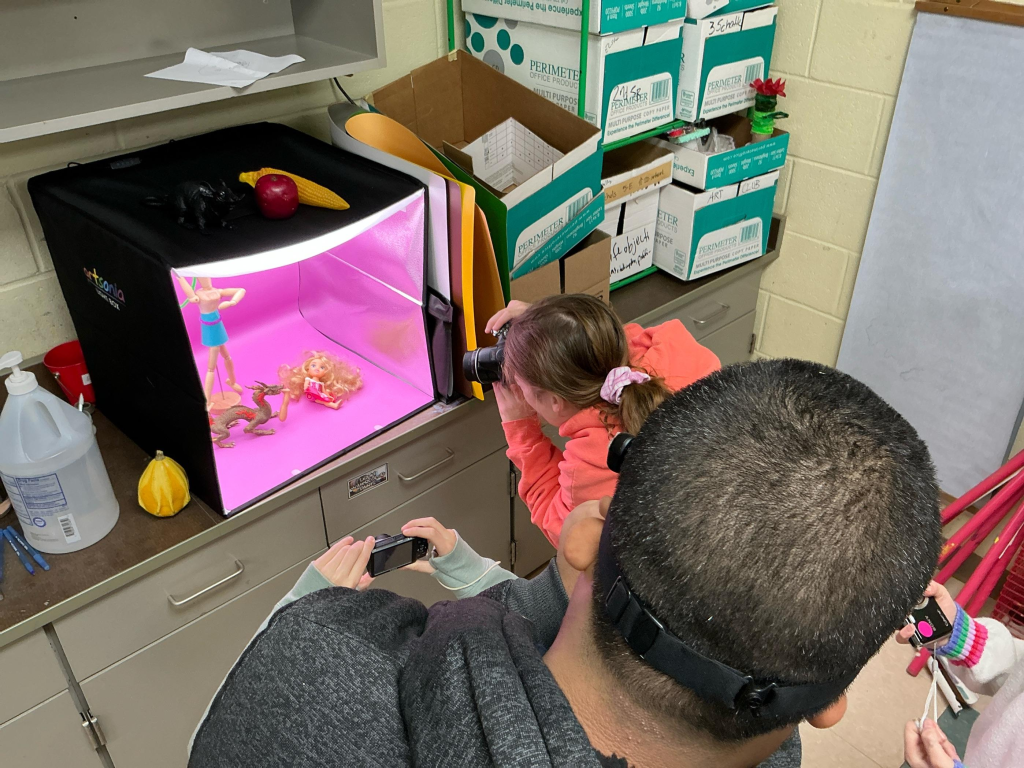
    This year, I introduced point-and-shoot digital cameras into our Media Arts studio—a game-changing tool for student voice, storytelling, and composition.

    I posted a message on ClassDojo, and thanks to generous donations from families in our school community, we now have several working cameras, LED lights, and even a tripod. I also received a light box donated by a parent and another from Artsonia (pro tip: they’re very responsive to teacher requests!).

    Students can:

    • Photograph still life objects, toys, or dramatic lighting setups
    • Use LED lights or light boxes to play with shadows and mood
    • Edit photos on iPads using tools like Pixlr or built-in photo editors

    Sharing options include:

    • 🖨️ Printing (if you have one or your school has a poster printer, even black & white look great!)
    • 🌐 Artsonia digital portfolios
    • 💡 Or your school’s platform (e.g., Seesaw, Google Drive, ClassDojo portfolios, etc.)

    TIP: Reach out to families for donations! Many have old cameras, props, or even lighting gear they’re happy to give.


    ✏️ Drawing Benches: New Energy for the Drawing Studio

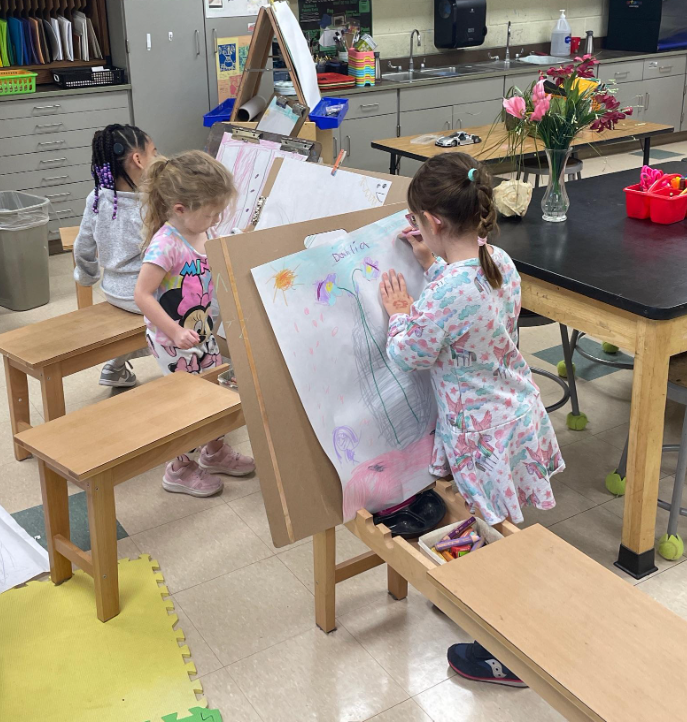
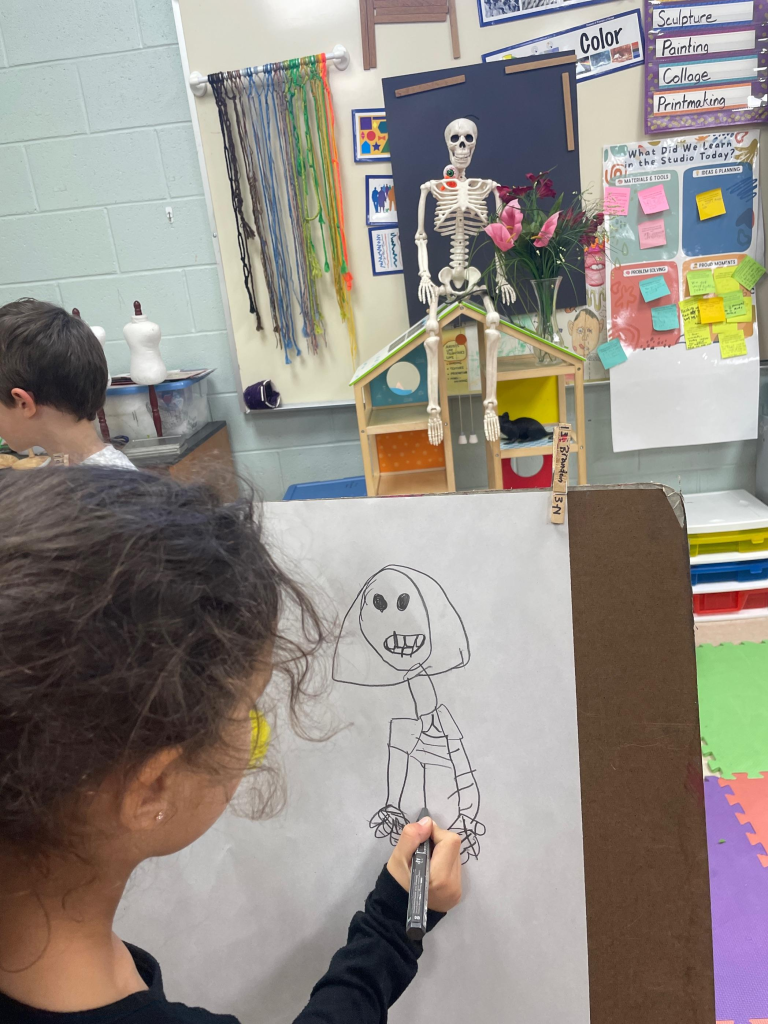
    A small shift with a big impact—this year I added drawing horse benches to our Drawing Studio, and the change in focus and posture has been incredible.

    Students love using these benches to work at a new angle, and I’ve noticed increased focus during observational drawing time. I keep mirrors and still life objects nearby to encourage close looking and slow drawing.


    🧠 Helpful Tools to Support Studio Work

    Some extra tools that have made a huge difference in our day-to-day flow:

    • 💡 LED reading lights – Great for photo lighting or spotlighting objects for observational drawing
    • Light boxes – Useful for layering, tracing, or creating glowing effects
    • 🎯 Objects to photograph – Toys, shells, dollhouses, puppets, figurines—great for storytelling or character development
    • 🔖 Visual clean-up charts – Helps build student independence
    • 🎨 Labeled studio centers – Use consistent signage and color coding to make studio navigation easier for all students

    🔄 Refining & Evolving

    While I still use sketchbooks and Osmo Masterpiece in my classroom, I didn’t feature them in this post as I’ve been focusing on building up new centers like photography and sculpture. TAB classrooms are always evolving—and what’s featured changes depending on student interest and studio flow.

    That’s one of the many reasons I love this approach: we adapt, grow, and respond to the artists in our room. 🎨


    🛠️ Download My Updated Studio Tips

    Want a peek into my full set of classroom tools and strategies?
    Click here to view the updated Tips & Tricks for TAB Studios Canva resource.


    💬 Join the Conversation

    What’s one tool or center you’ve added to your studio that made a big difference?
    I’d love to hear how you’re starting your year strong—drop a comment, or tag me on Instagram @inspiredarted!

  • Hello from Louisville, KY! I just arrived at NAEA 2025, and I couldn’t be more excited to present, learn, and connect with fellow art educators from across the country. This conference is always an inspiring space to exchange ideas, dive into new trends, and celebrate the power of art education.

    This year, I’m honored to present three sessions that focus on the intersection of Teaching for Artistic Behavior (TAB), AI in the Art Room, and student portfolios. If you’re attending NAEA, I’d love for you to join me, ask questions, and share your experiences!


    📢 My NAEA Presentations – Join Me!

    🔹 🎨 Navigating AI in Art Education – How can AI enhance creativity rather than replace it? I’ll be sharing hands-on applications, lesson ideas, and ethical considerations for integrating AI into the art classroom.

    🔹 🖍️ Reviving the Spark: Strategies for Confident Drawing in a TAB Studio – Exploring ways to encourage student choice and artistic growth through diverse drawing techniques, observational exercises, and media exploration.

    🔹 🏆 Creative Tracking: Portfolios and Challenge Badges in Elementary TAB Studios – How do we help students track progress, reflect, and showcase their work in a choice-based art studio? This session will break down digital and physical portfolio strategies, plus a look at using challenge badges for engagement.


    Let’s Connect!

    Whether you’re attending NAEA in person or following along from afar, I’d love to continue the conversation beyond my sessions! Let’s discuss:
    💡 What excites (or challenges) you about AI in art?
    📚 How do you help students develop their portfolios?
    🎭 What are your favorite ways to promote choice in the art room?

    If you’re at NAEA, come say hi! Otherwise, drop a comment below or connect with me on TikTok, Instagram, or Facebook to keep the discussion going!

    Looking forward to an incredible few days of learning and sharing. Let’s make the most of NAEA 2025! 🎨🚀

  • A colorful digital banner for Dr. Sery’s blog, featuring the text 'Dr. Sery – Inspiring Creativity Through Visual & Media Arts.' The background transitions from soft peach to light blue, evoking a warm and creative atmosphere. The banner includes a variety of art tools such as watercolor paints, paintbrushes, clay sculpture tools, glue, and scissors, representing traditional visual arts. On the right side, digital and media arts are depicted with a stylized smartphone, pixelated game-like graphics, a 3D printer with a clay pot, and a video editing frame. A playful Bitmoji of Dr. Sery is jumping joyfully among pixelated grass and mushrooms, symbolizing creativity and engagement in the digital world.

    For nearly 20 years, I’ve been immersed in the world of art education, helping students discover their creative voices through Teaching for Artistic Behavior (TAB), the Studio Habits of Mind (SHoM), Media Arts, and—most recently—AI. Throughout my journey, I’ve tested countless approaches, refined classroom studios, and explored the intersection of technology and creativity.

    Now, I’m excited to share what I’ve learned with you—fellow art educators, professors, and creative minds looking to grow and adapt in an evolving educational landscape.


    What You’ll Find on This Blog

    This space will be a mix of practical strategies and reflective insights, all centered around fostering creativity in student-driven art studios. Expect posts on:

    🎨 Studio Tips & Tricks – How I set up and manage different classroom studios, from drawing and painting to digital and sculpture. I’ll share what works, what doesn’t, and how you can adapt these ideas for your own space.

    🤖 AI in the Art Room – AI is changing the way we teach and create. I’ll break down how I use AI tools to enhance learning, generate ideas, and expand creative possibilities—while keeping student choice at the center.

    🖌️ The TAB Experience – Teaching with TAB is both empowering and challenging. I’ll share my experiences, successes, and strategies for making a choice-based classroom work, no matter your students’ skill levels.

    🔗 Resources & Outside Inspiration – If I find an amazing tool, book, or article, I’ll link to it so you can explore it too. This blog is all about collaboration and sharing what makes our teaching stronger.


    Why This Matters

    I believe that art classrooms should be spaces of exploration, critical thinking, and personal expression. Whether you’re a seasoned TAB teacher, new to AI in the classroom, or just curious about expanding your teaching approach, this blog is for you.

    If anything I share sparks a new idea for your classroom, let’s talk about it! Drop a comment, share your experiences, or connect with me on social media.

    What’s one challenge or topic you’d love to explore in art education right now? Let’s start the conversation! 👇